Brooklyn Marine Terminal + Brooklyn–Queens Expressway

Our waterfront.
Our voice.
Our next steps.

Help shape what happens in our neighborhoods. Take three actions now, then explore the BMT and BQE processes below.

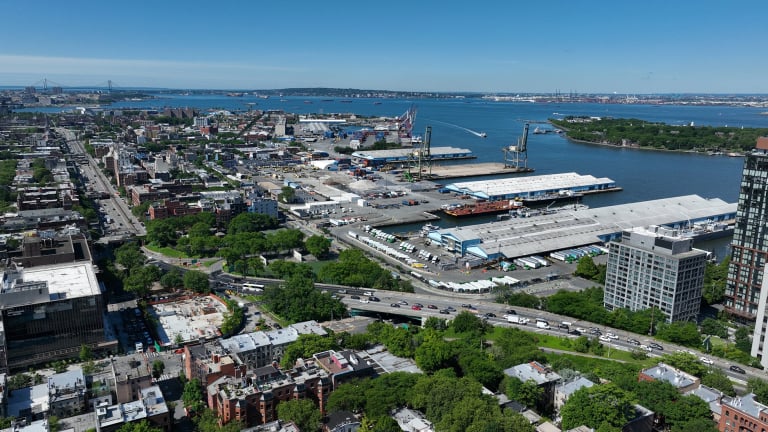
The Brooklyn Marine Terminal and the surrounding waterfront neighborhoods, viewed from above.
THE WATERFRONT WE SHAREBrooklyn, New York
Two projects.
One community living
with their effects.

Our working waterfront. Our neighborhoods.

Where are we now?

Brooklyn Marine Terminal (BMT) is a 122-acre working waterfront with a future worth protecting. We support a modern port that creates good-paying union jobs, moves more freight by water, gets trucks off our streets, and helps the city withstand emergencies. Our Blue Highway vision: water in, water out →

The City’s vision cuts the port footprint to 60 acres—roughly half the terminal—alongside 6,000 homes, mostly luxury homes. Our concern is that shrinking the working waterfront limits the port’s room to grow and its potential to serve New York.

The Brooklyn–Queens Expressway (BQE) Central rehabilitation review is now beginning too. These projects could bring years of overlapping construction—noise, dust, traffic diversions, and access problems—for the Columbia Street Waterfront, Red Hook, Cobble Hill, Carroll Gardens, Brooklyn Heights, and adjacent neighborhoods.

We need to help shape both projects now: press for alternatives, demand a study of their combined impacts, and secure enforceable neighborhood protections.Explore our concerns and alternatives →

Sources: BMT proposal · Assemblymember Simon on the housing mix · Blue Highways · BMT draft scope · BQE timeline

Take action now

Current action steps

Three things you can do right now. Start here, and check back as new opportunities open.

  1. 01 / BQE · COMMENTS OPEN

    Speak up by
    November 23.

    Ask DOT to study three lanes versus two and the effects on Columbia Street Waterfront, Red Hook, Cobble Hill, Carroll Gardens, Brooklyn Heights, and adjacent neighborhoods. Describe how traffic affects your daily life.

    2026 deadline · Meetings November 10 & 12

  2. 02 / BMT · HOLD THEM TO IT

    Write to
    public officials.

    Support an all-port future for all 122 acres and a fair study of that alternative. Keep cold storage at BMT. At a minimum, require the replacement port to be built and operating before housing begins.

    A ready-to-edit email makes it easier.

  3. 03 / COMMUNITY · SHAPE OUR PRIORITIES

    Take the
    community survey.

    Tell us what matters most to you. Your answers help us identify shared concerns, plan our next steps, and organize together.

Email your public officialsChoose recipients, add your experience, and open a draft.

Your experience gives this message its strength. Add where you live or work, how long you’ve been here, and what is at stake for you. Review the draft before sending. See the Blue Highway case for an all-port future →

Opening a draft does not send it. You send it from your email app. If your email app doesn’t open, copy the text and use the contact directory below. These letters support advocacy; formal comments also need to reach the agency’s official review.

Understand the process

Two projects.
Two different processes.

The Brooklyn Marine Terminal (BMT) and Brooklyn–Queens Expressway (BQE) have separate reviews, deadlines, and decisions. They use similar terms, but they are at different stages.

Tap or click a panel marked + to read more. Tap again to close it.

BMTWaterfront redevelopment

Brooklyn Marine Terminal

Scoping comments have closed. Prepare for public review of the draft environmental study and the state plan.

Follow the BMT process
BQEExpressway rehabilitation

Brooklyn–Queens Expressway

Scoping is open now. Tell DOT what to study. BQE scoping comments are due November 23, 2026.

Follow the BQE process

BMT · Waterfront redevelopment

Brooklyn Marine
Terminal

Where we are now

Scoping comments have closed.

Next: public review of the draft environmental study and the state plan. Watch for the official notices.

The BMT process

How BMT decisions
get made.

CEQR No. 25DME018K

This is not a done deal. The Task Force endorsed a vision. Final state decisions, financing approvals, and waterfront permits still matter. Follow these opportunities to ask questions, comment, and press for changes.

ESD project overview · BMTDC planning forecast · GPP hearing process

  1. 01
    Ongoing · Board decisions

    Follow the BMTDC board

    The Brooklyn Marine Terminal Development Corporation (BMTDC) makes project decisions. Read its meeting materials and ask your representatives or Community Board 6 to raise your concerns.

  2. 02
    Next · Two drafts, one public-review period

    Review the environmental study and state plan

    The published process brings these two drafts to public review together. Read both, submit comments through the official notices, and ask for specific changes before final decisions.

    Environmental study · DEIS

    The Draft Environmental Impact Statement examines impacts, alternatives, and protections. Check whether it answers your concerns and fairly studies the 122-acre all-port alternative.

    Environmental-review notices ↗

    State project plan · GPP

    Empire State Development’s General Project Plan sets out the project and the actions needed to carry it out. After initial adoption, ask for plan changes and enforceable commitments.

    State-plan notices & hearings ↗
    Who leads these reviews, and what can the state plan do?

    The City’s Office of Deputy Mayor Julie Su, Economic Justice is the lead agency; the Mayor’s Office of Environmental Coordination (MOEC) administers the review. BMT scoping closed May 8, 2026. Check whether the study addresses your earlier concerns and fairly compares the City Club / Tom Fox alternative, which keeps all 122 acres maritime.

    Official BMT environmental-review notice

    ESD’s board is chaired by Kevin S. Law; Hope Knight is its President and CEO. This state process can override local zoning. Ask ESD to explain the proposed powers, financing, and commitments in plain language. Meet ESD’s leadership.

    The published scope describes joint DEIS and GPP public review · State-plan hearing requirements

  3. 03
    After public review · Responses & final decisions

    Check the answers before final action

    The Final Environmental Impact Statement (FEIS) must respond to substantive environmental comments. Agencies make environmental findings; ESD can affirm, modify, or withdraw the GPP after public review. Keep pressing for unanswered concerns and enforceable protections.

    How the final environmental review works

    Under SEQR, at least 10 calendar days must pass after the FEIS is filed before findings. This is a consideration period, not a new comment window.

    SEQR process ↗
  4. 04
    Financing approval · Another decision to watch

    Comptroller review, then the PACB vote

    BMT also needs state financing approvals. Before the Public Authorities Control Board (PACB) votes on a financing application, State Comptroller Thomas P. DiNapoli can review it and comment. Ask for scrutiny of funding gaps, public costs, and the money needed to deliver commitments.

    Financing oversight: Comptroller, PACB & reformReview timing, voting members, questions to raise, and the Amazon HQ2 history.

    How financing approval fits in

    ESD’s General Project Plan sets out the project. The Public Authorities Control Board (PACB) separately reviews financing for covered state projects. Its approval is another decision to follow as BMT moves toward implementation. Look for BMT or related project names in the board’s agendas and resolutions.

    View PACB project approvals and meeting materials

    Who votes on financing?

    PACB has five members, but only three vote. A project approval requires all three votes. Members may designate someone to attend and vote on their behalf.

    Membership checked September 30, 2026. Check the official PACB roster for changes. State law explains appointments and voting.

BQE · Expressway rehabilitation

Brooklyn–Queens
Expressway

Where we are now

Scoping is open now.

Help shape what gets studied. Submit BQE scoping comments by November 23, 2026.

Write a BQE comment

The BQE process

Start with
what gets studied.

BQE Central · CEQR No. 26DOT006K

The New York City Department of Transportation (DOT) leads this separate project for the City-owned BQE Central section, including the triple cantilever. Its proposal keeps two lanes in each direction and uses temporary bypass structures during rehabilitation.

Sources: NYC DOT BQE Central

  1. 01
    BQE · Take action now

    Ask the study to address your concerns.

    Name the streets, travel needs, alternatives, and construction effects that need examination. Comments on the draft scope are due November 23, 2026. See how to submit your comment →

  2. 02
    BQE · Draft environmental review

    Read the analysis. Challenge the gaps.

    DOT forecasts a draft study and public meetings in late 2027. Check whether the DEIS answers the questions you raised. Ask for missing analysis and specific neighborhood protections.

  3. 03
    BQE · Later decisions

    Keep participating in approvals.

    DOT forecasts the final study in early 2028. Follow the FEIS, City land-use review, and state parkland legislation. Use each hearing and comment opportunity; ask your state legislators to scrutinize any parkland changes.

  4. 04
    BQE · If construction proceeds

    Track what happens on your block.

    Report disruption, record access problems, and follow up on promised protections. DOT forecasts construction in 2029–2040, including temporary bypasses and their removal. DOT also promises a community liaison, advisory committee, and regular office hours. Ask how to reach them and track the response. All dates are planning estimates.

BMT + BQE · Shared neighborhood impacts

Raise shared impacts in both reviews.

Traffic, truck routes, air quality, noise, emergency access, and construction can overlap. Ask each agency to explain the combined effects.

How could the construction timelines overlap?

The September 24 agency materials forecast BQE environmental review and later approvals in 2026–2028, early work and bypass construction in 2029–2032, and rehabilitation, bypass removal, and restoration from the third quarter of 2032 through 2040. Those phases overlap.

BMT uses 2038 as its environmental analysis year; that is not a guaranteed completion date. Its construction start is not fixed here. Ask both agencies to publish realistic overlap scenarios and their combined neighborhood effects before decisions are made.

September 24 ATF materials · BMT review documents

Dates to watch · Reviewed October 1, 2026

Know what is confirmed.

Information events help you prepare. Formal notices establish hearing dates, filing instructions, and comment deadlines.

BQE · Information events

Listed by NYC DOT

October information events

  • October 4 · noon–6 p.m. ET
    Atlantic Antic pop-up, Atlantic Avenue near Clinton Street.
  • October 6 · 7–8 p.m. ET
    Virtual BQE Q&A. Register →
  • October 13 · 4–7 p.m. ET
    Pop-up office hours, Brooklyn Heights Library, 286 Cadman Plaza West.
  • October 21 · 11 a.m.–2 p.m. ET
    DUMBO Archway Plaza pop-up, Pearl Street and Water Street.
  • October 22 · 11 a.m.–noon ET
    Virtual BQE Q&A. Register →
Check DOT event details ↗

BQE · Scoping & comments

Currently listed by NYC DOT

BQE comments and meetings

Written comments are due November 23, 2026. Tell DOT what the environmental study should examine.

  • November 10 · 6:30–8:30 p.m. ET
    In-person scoping meeting. Location has not yet been announced.
  • November 12 · 6:30–8:30 p.m. ET
    Virtual scoping meeting. Registration link has not yet been posted. Check DOT for registration ↗

DOT’s live project page currently lists these dates, which differ from the September 30 draft-scope PDF. Use the live project page for current filing instructions, the meeting location, and registration. DOT lists November 5 as the deadline to request interpretation for the virtual meeting.

Sources: DOT events and participation · September 24 ATF background materials

September 28, 2026 · Columbia Street Waterfront Association

BMT Community Forum

Watch the conversation about our waterfront’s future, explore the presentation, and share the resources with a neighbor.

Materials from the BMT Community Forum

View all forum materials →

Keep the tools close

Read. Write. Share.

Preview the one-page guide, prepare your own comment, or explore the concerns behind our requests.

Use the right submission channel, save your comment and confirmation, and follow up.

Stay connected.

Get notices, meeting dates, and the next opportunity to act.

Share with a neighbor.

Already taken these steps? Share the guide with someone who cares about our waterfront.

Keep these contacts close

Your representatives.
Your direct connection.

You don’t have to search for every office. Email, call, or use an official contact page below. Tell them where you live, how these projects affect you, and what you want them to do.

Start with the officials who represent your district. Ask for a written response and follow up. You can also contact City Hall and the Governor about the commitments their administrations must deliver.

City & borough

New York State

Project teams & community board

Financing oversight: Comptroller, PACB & legislative leaders

Raise questions about financing, financial risks, and delivery of community commitments. See when the Comptroller and PACB enter the process →

Governor’s representative · Chair

Blake G. Washington

New York State Budget Director

Who selects this seat? The Governor appoints this member and designates the chair. Governor Kathy Hochul appointed Washington as Budget Director.

Contact: Use the Division of the Budget’s official contact options. Ask that your message be directed to Blake G. Washington in his role as PACB chair.

Division of the Budget contact options ↗
Official biography ↗

Help us keep a community record. Please CC BMT Works for New York at BMTWorks4NY@gmail.com on your messages, or send us a copy of a contact form submission. Letters to officials support our advocacy.

For formal environmental comments, please use the agency’s filing instructions and deadline.

Official contact routes checked September 30, 2026; Julie Su’s office and MOEC added October 1, 2026. Email links open your email app; official contact pages open in a new tab.

Terms You Should KnowScoping, DEIS, GPP, and other terms explained.
Scoping
Deciding what the environmental study should examine.
DEIS
Draft Environmental Impact Statement: the draft analysis of potential effects, alternatives, and protections, published for review.
FEIS
Final Environmental Impact Statement: the final study, including responses to substantive comments.
GPP
General Project Plan: the state planning action through Empire State Development.
CEQR / SEQRA
City Environmental Quality Review / State Environmental Quality Review Act. BMT’s review follows the state framework and applicable City procedures.
BMTDC / ATF
The Brooklyn Marine Terminal Development Corporation makes board decisions. The Advisory Task Force provides advice during the planning process.
PACB
The Public Authorities Control Board (PACB) is a state board that checks whether enough funding is committed for certain public projects. It includes representatives selected by the Governor and legislative leaders. Follow its official page for information and meetings.
ULURP
Uniform Land Use Review Procedure: New York City’s land-use review process. DOT identifies land-use review and parkland approvals for BQE Central.

Sources: ESD overview · SEQR guide · DOT participation guide

We’re going to work together.
We’re going to plan together.
We’re going to organize together.
And we’re going to get through this together.

Find a way to get involved →

We move forward together

Have a question? Have something to offer?

Bring your concerns, your ideas, and your skills. There is a place for you in this work.

Ask a question or get involved